
Physical Interfaces – Sensing, Haptics, Fabrication
Physical computing bridges the gap between digital and physical worlds by creating interactive systems that sense and respond to real-world conditions. This enhances user experiences through novel interactions.
There are elements of physical interfaces that help us to study how people interact with computers and systems. For example, sensors detect environmental conditions, track movements, or locate touch points. Haptics provide tactile feedback and can make VR interactions feel more realistic. Fabrication blends computer science, design, engineering and manufacturing to turn digital files into physical objects using machines such as 3D printers, knitting or weaving machines, and CNC routers. Digital fabrication allows for rapid prototyping, customization, and the creation of complex geometries optimized for material properties. Our researchers in this area spend a lot of hands-on time building and iterating in our labs.
Students who want to learn more about HCI + physical interfaces might be interested in the following courses:
Faculty Researchers
-
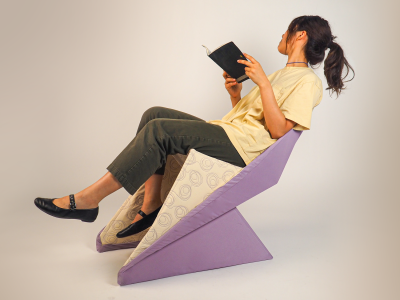
Researchers Create Flat-to-Shape Objects With Computer-Controlled Sewing
NEWSCMU researchers introduced a novel method for fabricating functional flat-to-shape objects using a computer-controlled sewing machine. ...
-

Protecting Audio Privacy at the Source
NEWSSound is a powerful source of information. By training algorithms to identify distinct sound signatures, sound can reveal what a person is...
-
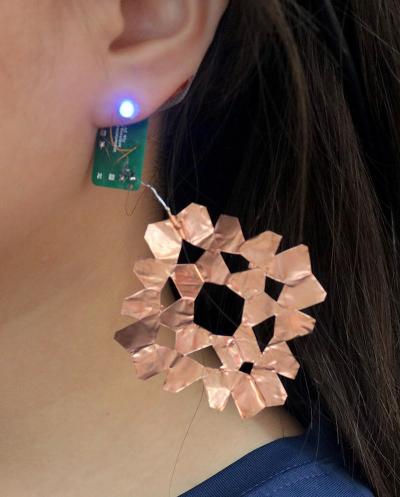
SCS Researchers Develop Method To Transmit Power Through the Body
NEWSPeople with diabetes rely on continuous glucose monitors to keep track of their blood sugar, but eventually the monitor's batteries need t...
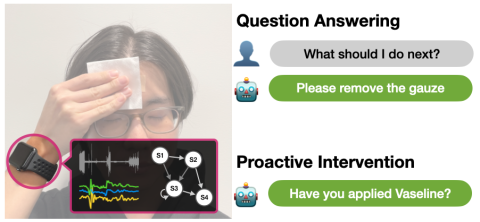
PrISM: Procedural Interaction from Sensing Module
PROJECTThere are numerous complex tasks in everyday life, from cooking to medical self-care, that involve a series of atomic steps. Properly executing these step...
-
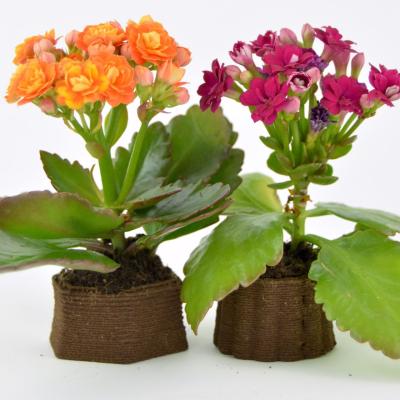
Brewing Sustainability
NEWSIt took a lot of coffee to power Mike Rivera’s push toward a doctorate degree in human-computer interaction at Carnegie Mellon. And it too...
-

CMU at CHI 2024
NEWSResearchers from the Human-Computer Interaction Institute (HCII) and several other Carnegie Mellon University schools and disciplines cont...
-
![Vivian facilitating a demo at UIST 2023. [This image is from the official ACM UIST photo album]](/sites/default/files/styles/400px_wide/public/2024-04/UIST-demo.jpg?itok=X4E0Dldp)
HCII at UIST 2023
NEWSThe 2023 ACM Symposium on User Interface Software and Technology (UIST) was held in San Francisco, California from October 29 to November ...
-
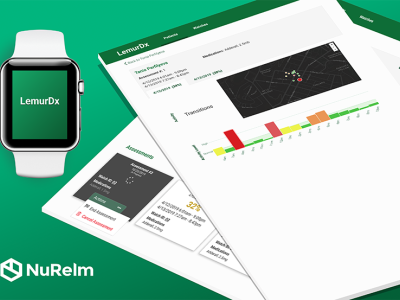
Smartwatches Could One Day Help Diagnose ADHD in Children
NEWSSmartwatch sensor technology developed by Carnegie Mellon University researchers could help doctors make more accurate diagnoses of attent...
-
Yao’s Seed Carrier Shortlisted for Science Breakthrough of the Year Award
NEWSLining Yao, the Cooper-Siegel associate professor in the School of Computer Science's Human-Computer Interaction Institute, and her E-seed...
-

Engineered Magic: Wooden Seed Carriers Mimic the Behavior of Self-Burying Seeds
NEWSHow seeds implant themselves in soil can seem magical. Take some varieties of Erodium, whose five-petalled flowers of purple, pink or whit...
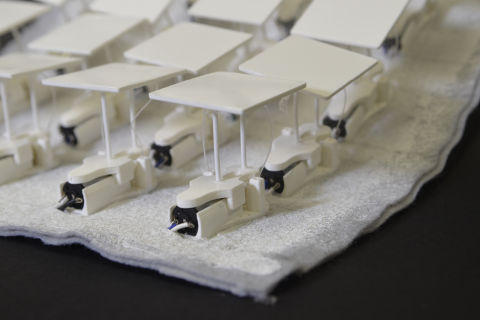
ReCompFig
PROJECTFrom creating input devices to rendering tangible information, the field of HCI is interested in using kinematic mechanisms to create human-computer inter...
-

The Shape of Pasta: HCII Assistant Professor Morphs Matter
NEWSLining Yao came of age in a small village in China's Inner Mongolia Autonomous Region. Like most families in her town, she didn't have a...