
Accessibility and Assistive Technology
Accessibility work is a crucial part of computer science, dedicated to making inclusive technology for everyone.
We prioritize accessibility throughout the process of designing and developing hardware, software and websites because all individuals deserve the opportunity to enjoy these digital interactions.
Disabilities are common and can be situational, temporary and permanent in duration. For example, visual and hearing impairments, mobility challenges, and learning disabilities can impact how individuals interact with technologies. Since abilities can vary widely by person and situation, research is key to understanding user needs and informing the design experience. There are many areas to study within the HCI + accessibility field, such as assistive technologies, adaptive interfaces, alternate input devices, data visualizations, and using voice and speech as inputs, just to name a few.
A commitment to accessible computing reflects our values of inclusivity and equality, and following the best practices of accessible design often improves user experience for everyone in the community.
Students who want to learn more about this HCI research area might be interested in:
- Occasional courses, such as 05-499/05-899: Special Topics: Accessibility: A Guide to Building Future User Interfaces
- Following the work at ASSETS the International ACM SIGACCESS Conference on Computers and Accessibility
-

Carrington Featured on Does Compute Podcast
NEWSSeason three of the "Does Compute" podcast brings listeners into conversations about innovation, safety and accessibility. The podcast, a ...
-

Season Three of 'Does Compute' Now Available
NEWSSeason three of the SCS podcast, "Does Compute," launches today on the GeekWire website, YouTube and wherever you listen
-

How Do Boomers Really Feel About AI?
NEWSAs older adults embrace artificial intelligence, they want the technology to be more in tune with their emotional needs, according to a re...
-

Rethinking PDF Accessibility From the Ground Up
NEWSResearchers in the Carnegie Mellon University School of Computer Science have developed a system that automatically improves PDF accessibi...
-

CMU at CHI 2026
NEWSThis year, authors from CMU contributed to 76 papers accepted to CHI, including 12 award-winning papers. “The interdisciplinary CHI confer...
-

CMU at ASSETS 2025
NEWSThe Association of Computing Machinery (ACM) SIGACCESS Conference on Computers and Accessibility (ASSETS) is an interdisciplinary research...
-
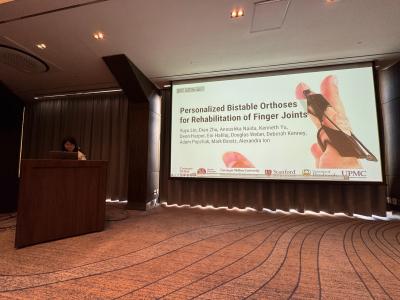
HCII at UIST 2025
NEWSWhat’s next in the future of user interfaces? Look no further for some possibilities. Faculty and students from the Human-Computer Interac...
-
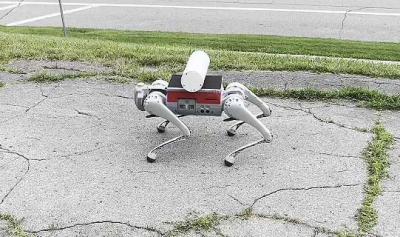
NSF Funds Development of Robots for Public Spaces
NEWSA Carnegie Mellon University research team recently received a $1.25 million grant from the National Science Foundation's Smart and Connec...
-

Ion Receives NSF CAREER Award for Material-Changing Interfaces
NEWSImagine a hard floor that adapts to cushion the impact of your fall, or a chair that adjusts its firmness and ergonomic support based on y...
-

CMU at CHI 2025
NEWSOur halls are abuzz with talk of “CHI” (pronounced “kai”), the nickname for the upcoming conference on computer human interaction (CHI). ...
-
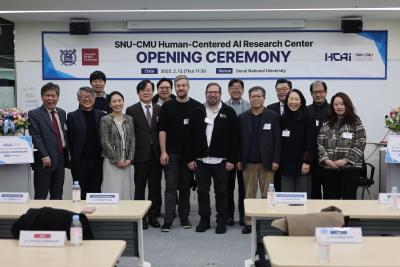
CMU Launches Human-Centered AI Research Center with Seoul National University
NEWSCarnegie Mellon University and Seoul National University (SNU) have announced a new collaboration to advance human-centered artificial int...
-
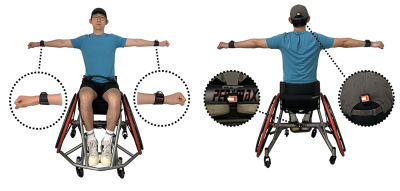
Virtually Accessible
NEWSWhen Atieh Taheri first donned a virtual reality headset and started walking around a virtual world, her experience didn't match what she ...